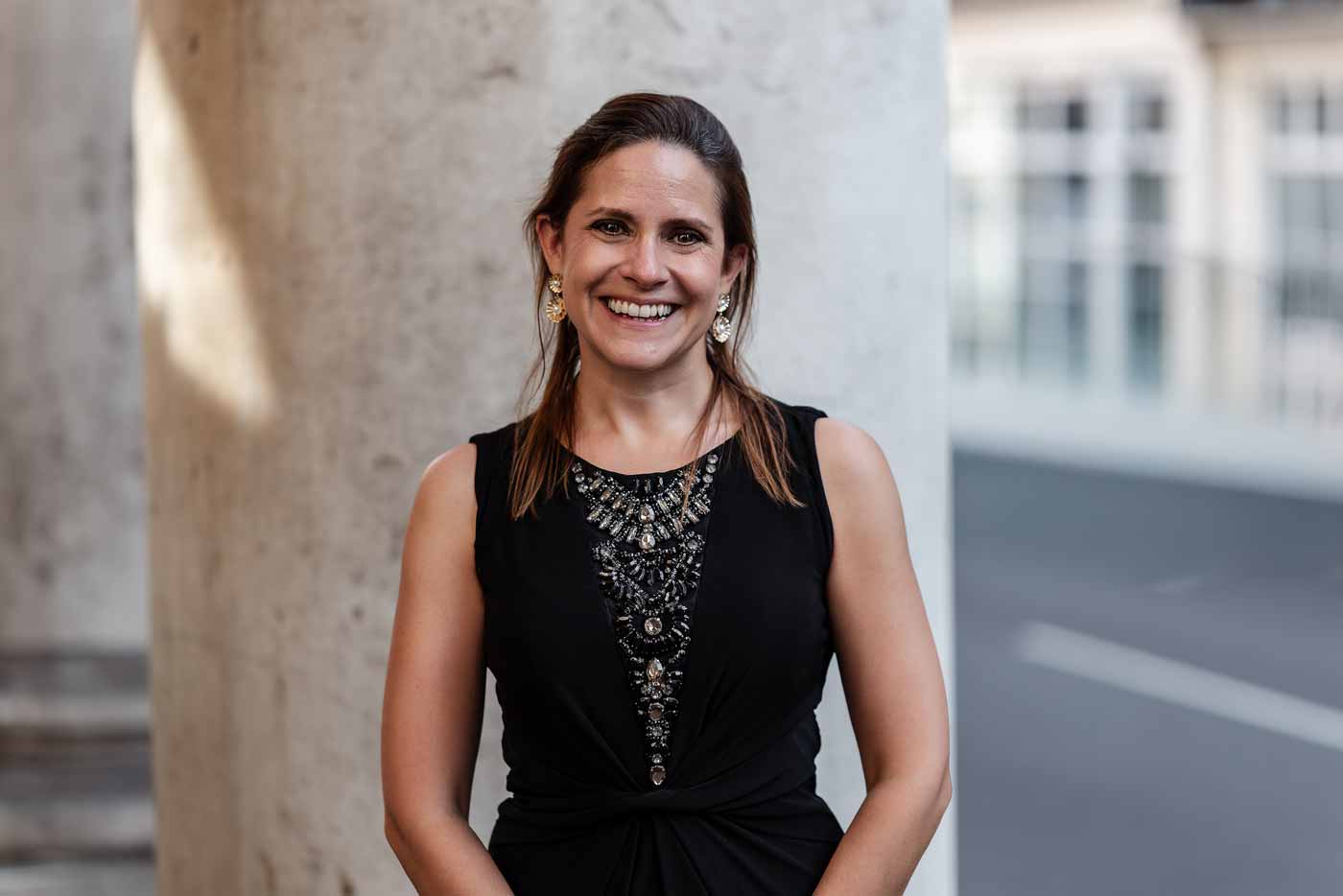
Bringing together music, architecture and lighting: Rosie Taylor on ‘Sunrise’
We caught up with Orpheus Sinfonia CEO Rosie Taylor to find out more about the forthcoming Sunrise concert:
This concert is part of the new Soundscapes series – can you tell us what that is, why it came about and what audiences can expect from it?
We’re always reflecting on what we are doing, what is most impactful, and ultimately what can best serve those we work with. The drama of our opera work, (particularly when we’ve started integrating musicians into the action plus the engagement with the spaces in which we are playing), plus conversations with audiences and musicians all led us to this vision, and articulating our stated desire to ‘experience music differently’. We wanted to find ways in which we could connect more immediately with the audience in performances and soundscapes developed for us as the way we could do that.
Soundscapes is conceived as an immersive experience for audiences which brings together music, space, architecture, art and lighting. Audiences can find themselves in a soundscape where they can explore emotional connection that speaks to them, engage afresh in music they may never have considered before or may have heard many times, and be enveloped in the power of the drama we can deliver when the whole performance becomes an experience.
What made you choose Stone Nest as a venue?
For a while I’d been looking for somewhere that would give us new performance opportunities, and deliver the desired audience experience. Somewhere that’s an inspiring space with an interesting heritage, a good acoustic to play in, and had the ability to give us the freedom of set-up in the space – so we can place performers and audiences together rather than apart.
Brilliantly Stone Nest is all of this, plus is a wonderful organisation investing in artistry and innovative performances. Exactly what we needed!
Why did you select Mahler’s First Symphony for this performance?
This was decision of the players – we’re always talking about repertoire and ideas etc. It actually came down to a close vote between Mahler 1 and Mahler 4 – with Mahler 1 just pipping past the post!
And why ‘Sunrise’ for the events title?
Simply because for me that’s what Mahler 1 immediately depicted in my mind the first time I heard it – without knowing any of its origins or Mahler’s inspirations. A glorious revealing of that incomparable light you get at sunrise when you’re out in the midst of nature. The whole symphony can be seen to illustrate a day on the mountains, and it all starts and emerges from that stunning sunrise. Humanity derives from nature and at the end of the day, nature is by far the greater power,
For me to share our interpretations of the music with our audiences and reveal what we find in the music to others is part of our job as musicians, and the whole idea behind Soundscapes is to connect with the music – to share that with audiences so they can have the opportunity to enjoy engaging with this incredible music.
The performance will be accompanied by a professional lighting design. Why did you choose to add lighting to the performance, and does performing with lighting pose any challenges for the musicians?
Once you start visualising a sunrise in the music there really is only one way you can depict that in performance and that is with professional lighting design. (I also wouldn’t say no to taking Orpheus out to the Alps where Mahler wrote and was so deeply connected with the countryside and nature there). The lighting design is being done in conjunction with the musicians, and we’re working through it all together so it is integrated fully into the music – and our playing of it. This process has become an interesting one too as it leads us all to re-examine the music on the page and discover things we may not have been aware of before.
It’s Orpheus Sinfonia’s first public performance with conductor Carlo Antonioli – but you did work with him on a recent event at the British Museum. Can you tell us a bit about what working with him was like and why you invited him to conduct ‘Sunrise’?
I was fortunate enough to be introduced to Carlo by one of our trustees when Carlo came over to the UK from Australia where he’s been doing fantastic things with all the orchestras out there. It immediately became apparent that he shared the same vision and approach as the Orpheus musicians, and what we seek in our performances – and our hopes with Soundscapes. This warmth of approach and deep connection with the music – exploring how we can connect with audiences today – resonated with all of us. He skilfully guided the players through the music at the British Museum, miraculously fixing things, drawing out a collective deeper musicality, and effectively worked with the space – just as we aim to in our Soundscapes series.
And…can you tell us what is next in the Soundscapes series?
Really excited to tell you that next up we have The Four Seasons. Our exquisite Principal Violinist Eleanor Corr will be the soloist, performing ‘in the round’ at Stone Nest, and with lighting bringing out the contrasting seasons that Vivaldi depicts so vividly. I am truly most grateful to Peter Nullis for sponsoring this – who brilliantly has recognised the outstanding talent of our Principals in pledging to support them in concerto performances over years to come.
Sunrise is at Stone Nest on 13 March 2026. Full details here.